J202 / Spring 2025 / Pitch lead
open
house.
Pitching a better student housing search.
I led the pitch for Open House, bringing our team’s research and app concept to a panel of mock investors. We won best pitch in our class.
Best pitch in class · Mock investor presentation
 Swipe, Swipe, Sign™THE TEAM’S ORIGINAL TAGLINE
The purpose
Make affordable housing
easier to find.
Open House was our proposed nonprofit housing platform for students and young adults. Its mission was to make housing information clearer and more accessible, with tools to compare listings and find compatible roommates.
Tenant messaging connected transparency, shared preferences, and reviews to a more informed housing search. The pitch had to make that value clear to an audience hearing about the concept for the first time.
My role / Pitch lead
Bring the team’s work
into a seven minute pitch.
I was responsible for the pitch and presented Open House with a copresenter to a panel of mock investors.
The challenge was to explain why the platform should exist, make its features understandable, and present a proposed revenue strategy within the assignment’s seven minute limit.
A shared project.
A specific responsibility.
The course divided the work across strategy, platform, content, and pitch teams. I brought the concept to the panel through the pitch. The research, branding, and app mockups shown here represent the wider team’s work.
J202, Spring 2025. Research and platform development were shared across the project teams.
How the work came together
The strategy brief assigned market research and audience definition. Our final pitch reported findings from 109 survey respondents.
Team planning documents record app ideas, a site map, Canva mockups, and WordPress planning. Content assignments connected the concept to tenant needs and multimedia explanations.
The assignment required a practice pitch and a final presentation to an expert panel. Our feedback notes address both the argument and how we delivered it.
02 / Ground the pitch in evidence
Give the housing problem a concrete basis.
Our pitch drew on the team’s original survey of 109 respondents. I used that evidence to communicate the need for Open House, connecting a familiar housing frustration to specific findings.
The figures framed a search that felt rushed and discouraging. They gave the audience a reason to consider a platform focused on clearer information and easier comparison.
Survey findings reported in the final presentation, slide 3. Recruitment, question wording, and respondent demographics are not supplied in the deck.
thought housing filled up too quickly
felt discouraged in their search
reported average housing experience rating
Connect the evidence to the proposal
Explain what each feature is meant to solve.
The pitch paired survey findings with proposed responses. Select a concern to see how the argument connects a need to an app feature.
said housing was too expensive.
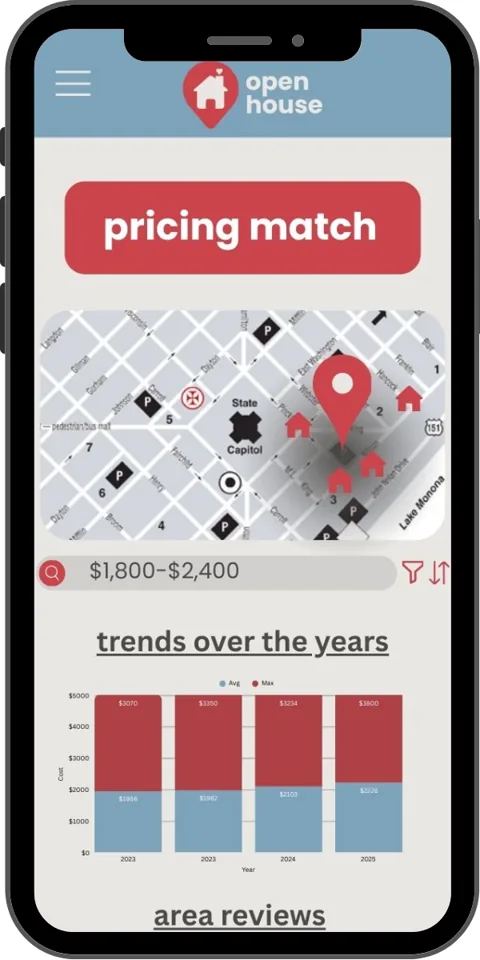
Make prices easier to compare.
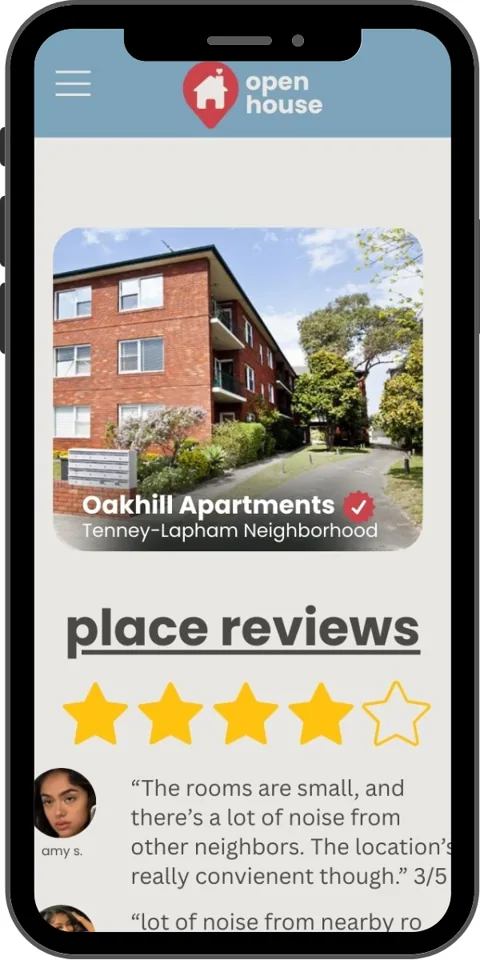
The team proposed a price comparison function and a rule against delayed public marketing of listings on Open House. The goal was to give students clearer information while comparing options.
Presentation, slides 13–14. A proposed response to affordability concerns, not evidence of reduced rents.
wanted an app that recommends roommates based on shared preferences.
Build roommate discovery into the experience.
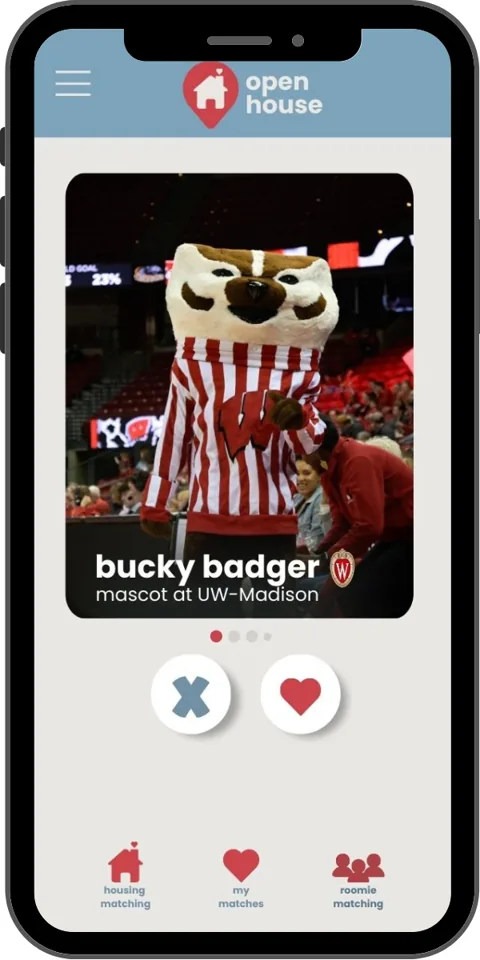
The team proposed roommate swiping, reviews, instant messaging, and community events. Shared preferences would give students a starting point for a conversation before choosing to live together.
Presentation, slides 15–16. Stated interest in the survey does not establish future adoption or matching success.
struggled to find convenient housing.
Bring more context into the decision.
The team proposed property and neighborhood reviews, landlord ratings, and property verification. These features would give students more information to assess whether a listing fits their needs.
Presentation, slides 17–18. These are proposed features, not tested improvements in the housing search.
03 / Make the proposal understandable
Use the screens to explain the experience.
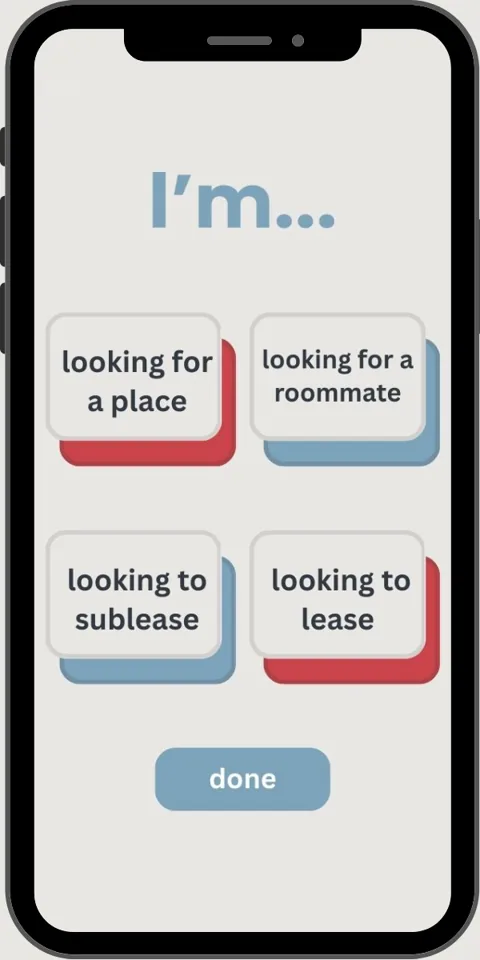
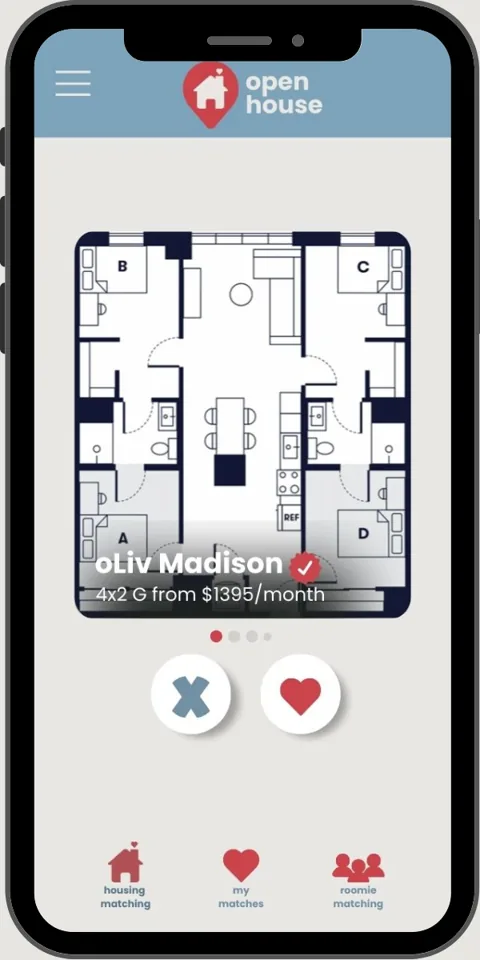
The platform team’s Canva mockups gave the pitch concrete examples to walk through. Each screen helped explain what a student or lessor could do with the proposed platform.
Concept screens, not a functioning app.
Concept screens, not a functioning app.
Concept screens, not a functioning app.
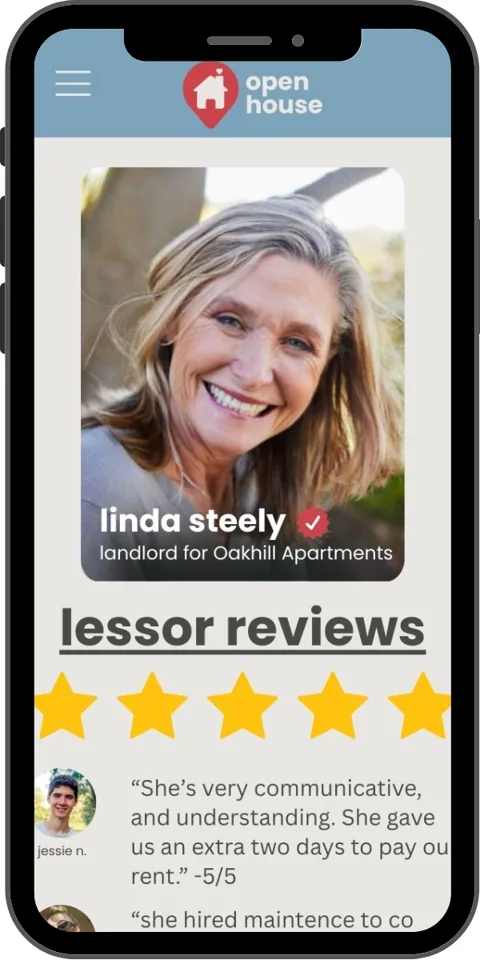
Concept screens, not a functioning app.
The screens let the team explain a feature through an example. A viewer could see what the proposal meant, rather than having to imagine an app from a list of features.
04 / Work through the presentation feedback
Make the argument
easier to follow.
Our practice presentation received specific feedback on structure, survey language, delivery, and the close. These notes show the decisions behind presenting the concept clearly.
Explain the need before the walkthrough.
Reviewers wanted the “why this matters” section earlier and a clearer connection between the problems and the features. They also flagged slides with too much information.
The audience needed a reason to care before seeing the interface. The final deck establishes housing frustrations, survey findings, and the mission before introducing app screens.
Final Presentation Notes; final deck, slides 2–12. The deck still presents the detailed problem and solution pairs after the initial walkthrough.
Be precise about who the survey describes.
The notes asked us to clarify who the respondents were and improve how we talked about the survey results.
Persuasive statistics need context. The deck reports 109 respondents. This case study keeps the findings tied to those respondents rather than making claims about all students in Madison.
Final Presentation Notes; final deck, slide 3. The supplied materials do not specify the sample’s demographics or recruitment method.
Make transitions and the close more deliberate.
The notes describe my delivery as straightforward and to the point, and Sean’s as casual and relaxed. Reviewers called for smoother transitions and a stronger closing call to action.
The pitch needed a consistent rhythm across two presenters. The final deck closes by asking the audience to help house the future, making the mission part of the ending.
Final Presentation Notes; final deck, slides 20 and 25–26. The notes identify areas to work on; they do not document the final delivery or rehearsal count.
Source: Final Presentation Notes and the final pitch deck. Review themes shown here include both feedback and observations from the presentation.
Complete the argument
Explain the value.
Then explain the plan.
Connect the story.
The 26 slide pitch moves from the housing problem to survey evidence, the mission, app screens, proposed solutions, and a revenue plan. That structure connects the product idea to the problem it is meant to address.
Consider how to support it.
The proposed model combines landlord and property verification with grants, event income, in app advertising, and donations. The presentation also outlines an ambition to expand beyond Madison.
Presentation, slides 19–26. These are proposed funding and expansion plans. The deck does not document a launch, revenue, adoption, or tested business viability.
The result / Class mock investor presentations
Best pitch in our class.
I led the pitch for a shared team project and helped bring its research, product concept, and proposed business model into one presentation. Our team earned best pitch among our classmates.
Research translation
Use survey findings to explain the need for a product.
Persuasive presentation
Connect proposed features to the concerns an audience needs answered.
Collaborative communication
Bring work from several teams into a clear presentation and engage with specific feedback.