A familiar brand.
A reason to choose it again.
I researched who Cheerios was reaching, what was changing in the cereal aisle, and where General Mills wanted to grow. Then I connected those findings to an audience and campaign direction our team could build on.
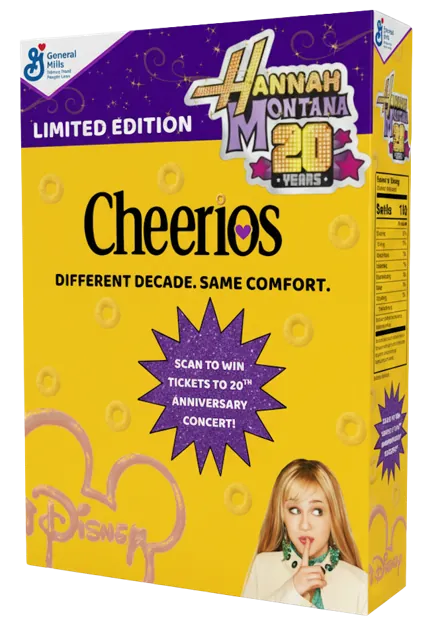
Give the team a reason behind the idea.
Our assignment was to develop an integrated campaign for Cheerios. I was responsible for researching the brand’s history, industry trends, competitors, and consumers, then compiling the findings into a SWOT analysis.
I wanted our recommendation to make sense for the people buying Cheerios and for the company behind it. That meant looking at the business, the household, and the cereal aisle together.
We each took responsibility for our assigned role and helped each other throughout the project. I led the research work and contributed to the shared campaign. The executions shown here are the result of that collaboration.
I started by questioning what had changed.
My early notes asked whether Cheerios had kept up with its audience as their needs changed. I considered several possibilities: the product itself, the packaging, the message, and the appeal of newer options on the shelf.
I explored changes in interest around protein, simple ingredients, convenience, and new ways to eat cereal. I also looked at the trust and familiarity Cheerios had already built.
A clearer problem to investigate: how could Cheerios feel relevant to younger adults while keeping the qualities families already trusted?
See the research trail
My early brand questions appear in Untitled document (1). The research PDF develops those questions into category observations, possible product uses, and ideas to investigate. These were starting hypotheses, not findings from a completed consumer survey.
I took the research into the cereal aisle.
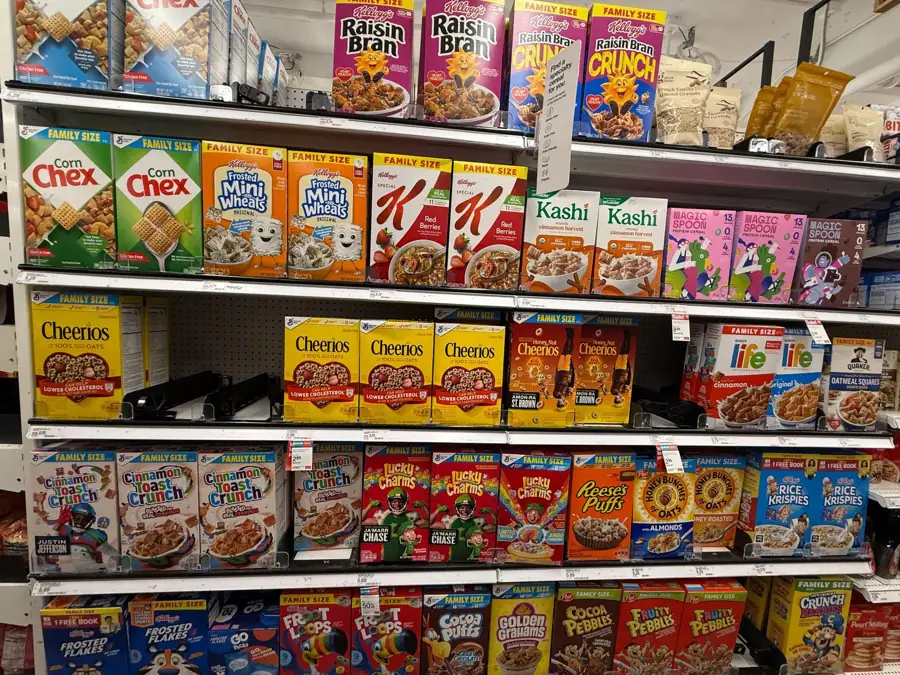
I photographed store shelves to see how Cheerios appeared beside competing products. I looked at packaging, the benefits brands emphasized, and the range of choices a shopper encountered.
My competitor research considered both familiar cereal brands and newer options drawing attention to protein or ingredients. Seeing them together made the challenge more concrete: Cheerios had to give people a reason to choose it in a crowded aisle.
See the research trail
The situation analysis includes store photos under Target on State Street, Fresh Madison Market, and Target at Hilldale. My research notes also outline a competitor comparison using pricing and nutrition. The photo shows the retail context; it does not measure shopper behavior.
I used consumer data to get more specific about the audience.
I worked with MRI Simmons data to compare Cheerios consumption across household types and life stages. Our analysis pointed to a strong relationship with households raising young children, alongside an established older audience.
This helped me think beyond “young adults.” Parents choosing breakfast for toddlers had different needs from students buying groceries for themselves. I used those differences to help explain whom we should prioritize and how the campaign could speak to them.
A primary audience of parents aged 25 to 35, with younger adults as a secondary audience and older family shoppers considered in the research.
See the research trail
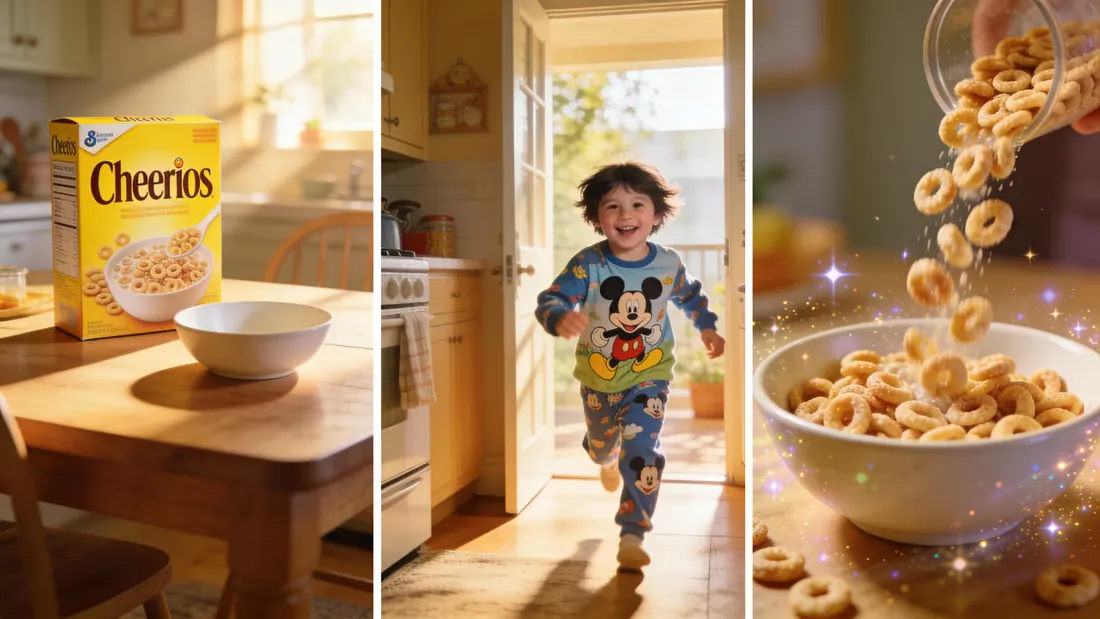
The final booklet’s consumer analysis appears on pages 8 through 11, and the personas appear on pages 23 and 24. Those personas describe proposed audiences; they are not people we interviewed. The television concept translates family routines into a scene viewers could recognize.
I looked up where General Mills wanted to grow.
I researched General Mills’ fiscal 2026 priorities because I wanted our proposal to support the direction the company was already taking. Its investor materials identified Hispanic households as an important audience for growth.
I connected that priority to my developing recommendation around Hispanic parents, family routines, and the memories they could share with their children.
This gave me a clearer way to explain why our audience mattered. The recommendation connected a creative opportunity with a stated company priority.
See the research trail
My brainstorm preserves the fiscal 2026 discussion from General Mills’ October 2025 Investor Day. The connection between company priorities and our audience recommendation appears in the final booklet’s Target Market section on page 22, with source references on page 23.
I developed the reasoning behind the Disney connection.
I explored Hispanic parents who grew up watching Disney Channel and were now raising children of their own. I also considered older relatives who remembered those shows from when their children were young.
To investigate the media side, I brought in Nielsen research showing that Hispanic audiences devoted more of their television time to streaming than the overall U.S. audience. That made streaming a relevant place to consider reaching them.
Why familiar entertainment, family routines, and a familiar cereal could belong in the same campaign. The emotional connection was our creative hypothesis, supported by audience context.
How the idea became something to pick up
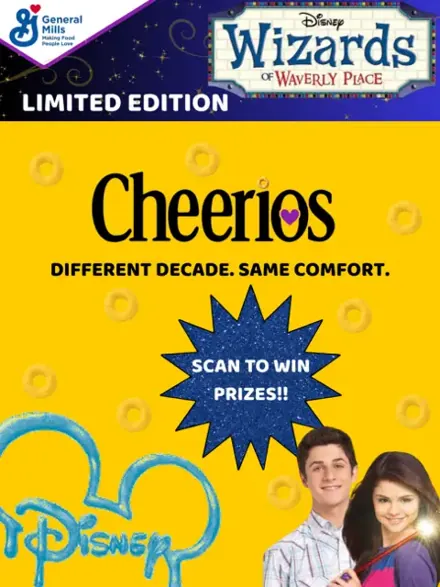
Our team carried that connection into a collectible packaging series. Each show offered a different point of recognition, while the yellow box and shared message kept the collection connected to Cheerios.
Booklet, page 38
Team concept from my existing portfolio
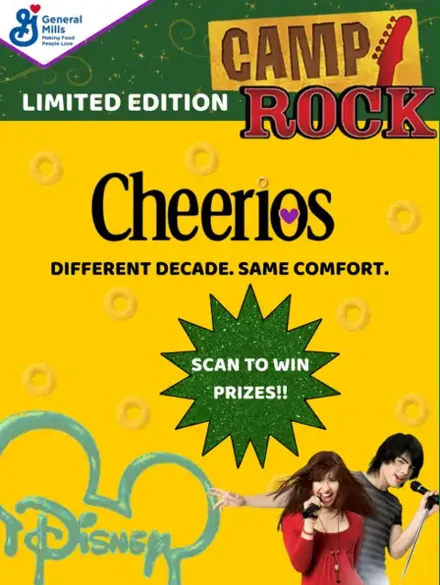
Team concept from my existing portfolio
The booklet describes all three editions and pictures the Hannah Montana box. The other two designs are from the team gallery already on my portfolio.
See the research trail
The brainstorm begins with my audience idea and collects Nielsen findings alongside company research. That reasoning appears in the final booklet on pages 22 and 23. The creative framework on page 36 connects nostalgia with streaming, bilingual households, and family memories. Nielsen’s research supported the media context; it did not test our campaign or prove purchase intent.
I helped turn the research into choices.
My role included bringing the findings together and developing the SWOT. Our situation analysis identified three priorities: sharpen the audience focus, strengthen the digital presence, and address changing expectations around health.
I connected the consumer and company research to the audience recommendation in our strategy. That gave the team a basis for deciding whom to reach, what to emphasize, and why nostalgia could be meaningful for this campaign. The final booklet brings that thinking into the creative framework and executions.
See the research trail
The role description assigns research compilation and SWOT development to the Research Director. The situation analysis contains the SWOT and three issues with implications. The campaign strategy shows how the research connects to audience profiles, messaging, and the creative brief. Creative, media, and PR were shared team work led by the respective directors.
The same audience thinking, across different formats.
The finished concepts show how the campaign could meet people during a grocery trip, a family morning, or the return to school. My contribution was helping establish the audience and reasoning those choices could build on.
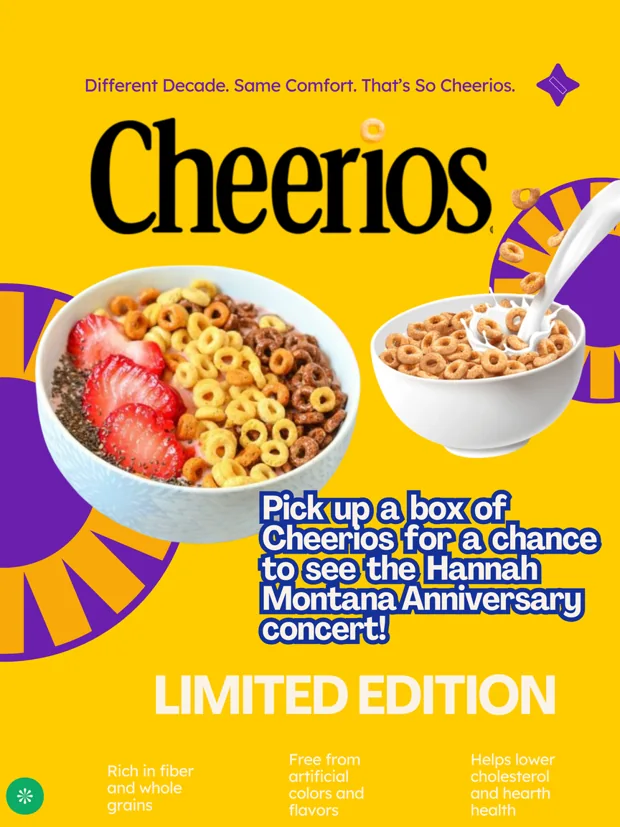
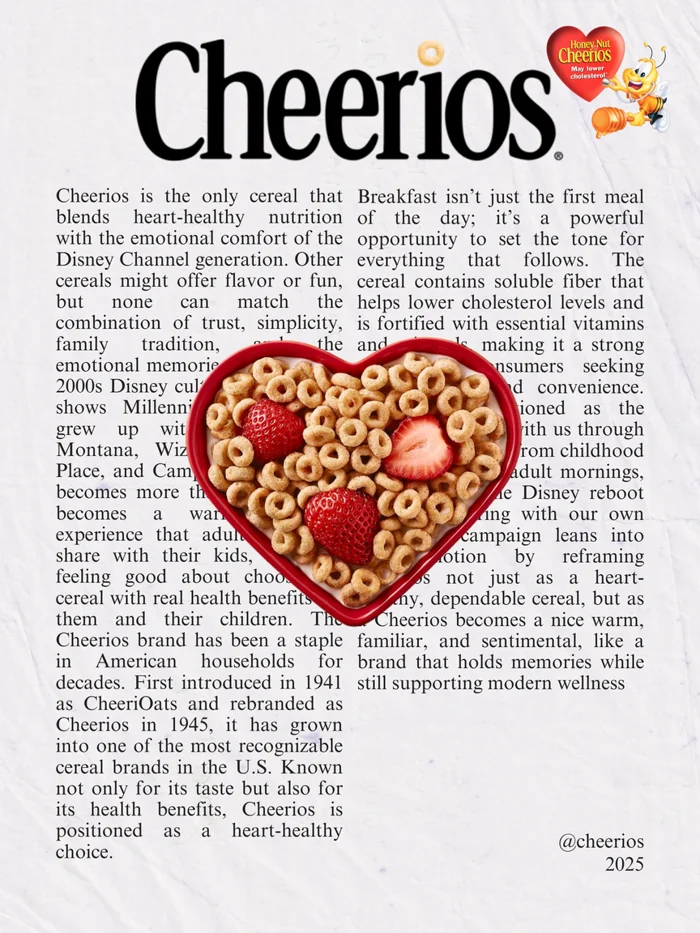
Make the memory recognizable
Our magazine concepts paired the familiar Cheerios identity with the feeling of childhood and a proposed promotion. They show two ways to carry the campaign into print.
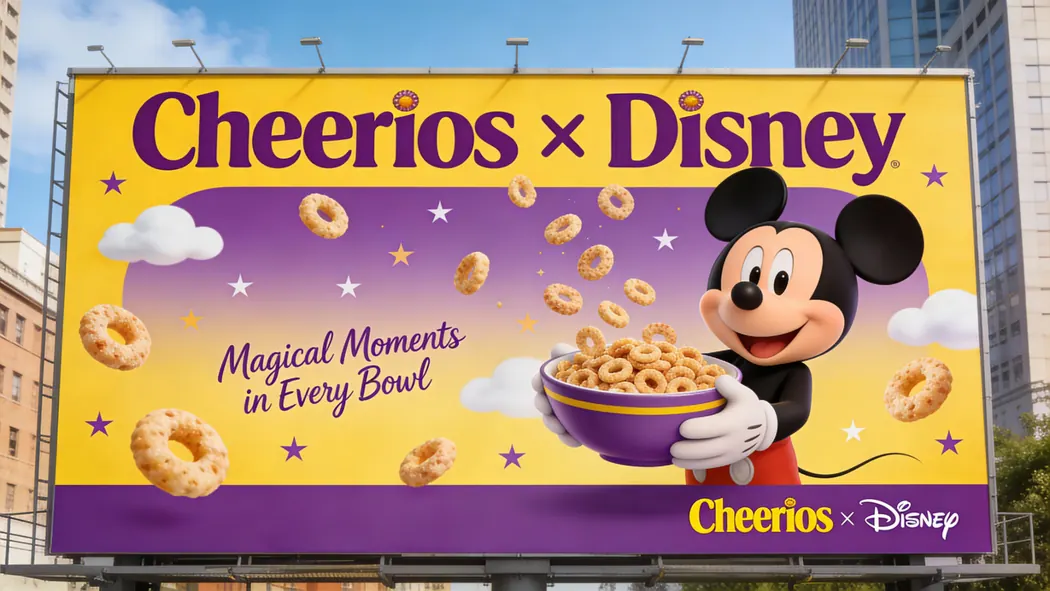
Connect the idea to a real routine
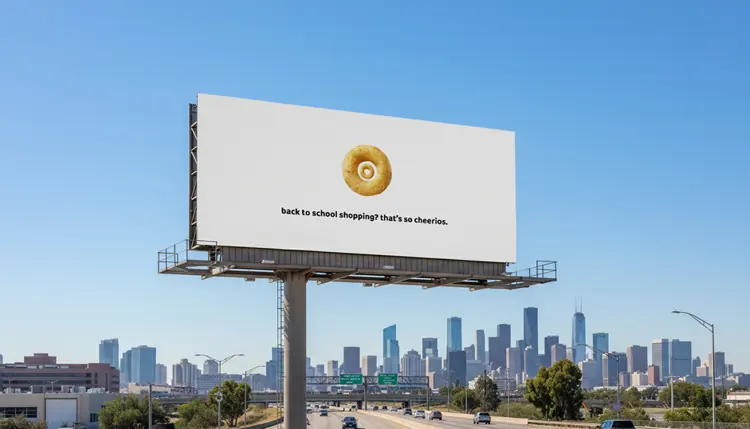
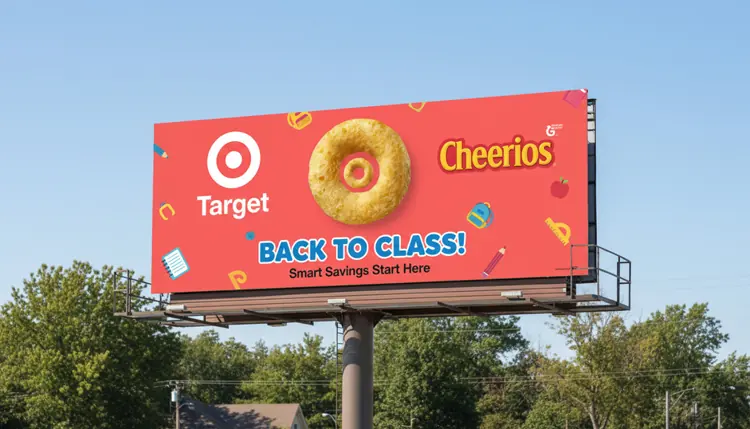
The team’s outdoor concepts brought together Disney recognition and the practical rhythm of shopping for the school year. That connects back to the parents we prioritized in the research.
How the campaign extended beyond these images
Our final proposal also included three audio scripts built around family mornings and grocery shopping, a social strategy with throwback challenges, and PR ideas including a Nostalgia Café tour, wellness conversations, and retailer events. These were planned executions described in the booklet, not events we launched.
Booklet: audio, page 39; social, pages 47 and 48; events, page 49; draft press releases, pages 50 through 52.
A campaign the team could explain from the audience up.
Our team developed a Cheerios and Disney proposal around “Different decade. Same comfort.” My contribution was the research and reasoning behind the audience direction: who we wanted to reach, why they mattered to the business, and how family memories could connect the idea to their lives.
That thinking appears in our final 53 page booklet, from the audience recommendation to the creative framework. We won best campaign in our class.
This was a student campaign proposal. The sales increase in our plan was a goal, not a measured result.
Research that other people can use.
What I brought
Experience with consumer and category research, curiosity about food brands, and a habit of asking what the numbers mean for the people making decisions.
What I developed
Practice connecting company priorities, household data, and cultural context into one recommendation. I became more deliberate about explaining how each finding could inform a campaign choice.